
Table of Contents
Mechanical Diagnostics and Restoration: Lift Repair Services in Kukatpally
Kukatpally has evolved into one of Hyderabad’s most densely populated commercial and residential hubs. From the high-rise gated communities along the KPHB Colony blocks, Vivekananda Nagar, and Bhagyanagar Colony to the commercial retail strips lining the Mumbai Highway, vertical transit infrastructure operates under intense, continuous demand. The local geology, characterized by hard granite strata and high seasonal groundwater fluctuations, combines with high daily passenger counts to subject elevator networks to significant mechanical and electrical stress.
When a vertical transportation asset malfunctions, it disrupts daily routines, compromises building accessibility, and introduces potential safety risks. Securing professional lift repair services in kukatpally guarantees that your elevator infrastructure is restored using precise engineering methods. These systematic diagnostic and repair protocols align fully with the Bureau of Indian Standards (BIS) IS 14665 codes and the strict safety guidelines enforced by the Telangana State Electrical Inspectorate.
2. Common Technical Failures in High-Demand Lift Systems
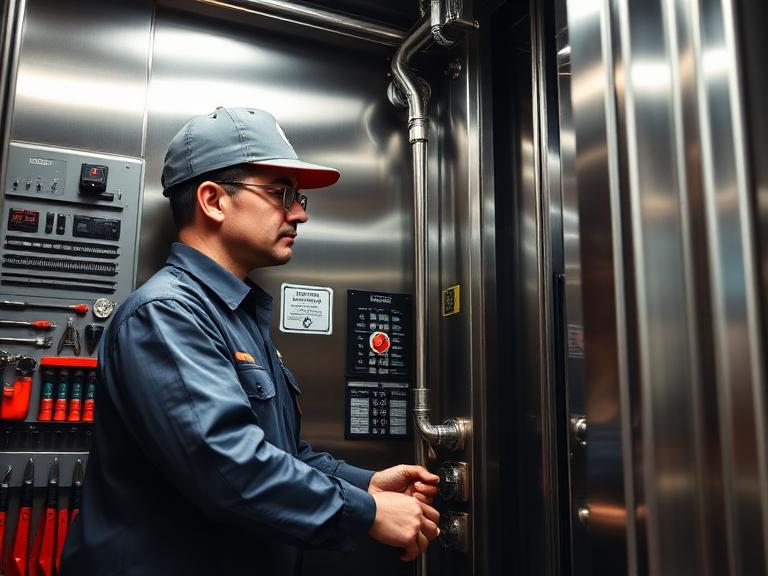
Elevator networks are intricate assemblies of synchronized subsystems. Field data collected across residential apartments and commercial blocks in Kukatpally highlights four common technical failure points.
A. Microprocessor Control Board and Safety Loop Failures
The elevator control panel functions as the central processing unit of the system, continuously monitoring a series safety circuit. Voltage fluctuations or sags within local power grids can stress sensitive solid-state electronics.
- The Issue: Relay contacts can become pitted or carbonized, and logic boards can glitch, causing random system shutdowns or sudden, unprovoked emergency brake deployments.
- The Solution: Technicians utilize advanced digital multimeters to trace the voltage drop across individual circuit segments, replacing worn out relays or replacing damaged logic modules to restore stable operations.
B. Traction Machine and Drive Sheave Degradation
Geared and gearless traction systems rely entirely on friction between the high-tensile steel suspension ropes and the cast-iron drive sheave grooves.
- The Issue: Over time, uneven rope tension or normal structural wear can cause the sheave grooves to pit or wear down unevenly. This degradation leads to cable slippage, subtle cabin vibrations during transit, and accelerated cable wear.
- The Solution: Repair crews perform precision on-site sheave regrooving or replace the entire traction assembly, while re-tensioning the steel ropes using digital load cells to ensure perfectly balanced weight distribution.
C. Landing Door Interlock and Gate Operator Malfunctions
More than 60% of all emergency breakdown calls in Kukatpally stem directly from issues with the landing doors. Dust, lint, and debris can accumulate inside the floor-level sill tracks, or building settlements can cause subtle structural misalignments.
- The Issue: If the mechanical lock beak fails to engage the electro-mechanical micro-switch securely, the series safety loop remains open, and the elevator controller locks the cabin in place to prevent movement.
- The Solution: Engineers clear the track profiles, replace worn carbon pick-up brushes, realign the door hanger assemblies, and adjust the interlock contacts to a strict 2mm tolerance.
D. Automatic Rescue Device (ARD) Battery Degradation
During seasonal power shifts or peak summer loads in Telangana, home and apartment elevators rely heavily on their ARD sub-systems.
- The Issue: Lead-acid or lithium battery packs kept in warm, unventilated overhead machine spaces can experience accelerated plate sulfation or capacity drop-offs. If the batteries fail, a sudden power cut can cause immediate passenger entrapment.
- The Solution: Preventative maintenance teams execute load-discharge tests on the battery array every quarter, swapping out weak cells to guarantee the system retains the energy capacity needed to move a fully loaded car to the nearest floor landing during an outage.
3. Comparative Matrix: Repair Costs and Component Lifespans
The budget required for an elevator restoration project depends on whether the malfunction involves standard auxiliary switches or the primary mechanical drive machinery. The table below outlines current market repair estimates across the Kukatpally sector.
Component Restoration Pricing Index
| Malfunctioning Subsystem | Typical Failure Indicator | Estimated Component Lifespan | Average Local Repair/Replacement Cost (INR) |
| ARD Battery Bank (Set) | System stays offline during power cuts; error codes on panel. | 3 to 5 Years | ₹14,00,000 – ₹28,000 |
| Landing Door Interlock Switch | Car doors close but the cabin remains completely stationary. | 5 to 7 Years | ₹3,50,00 – ₹7,500 per floor |
| VVVF Inverter Drive Module | Rough cabin acceleration; erratic leveling at floor landings. | 8 to 10 Years | ₹45,00,00 – ₹95,000 |
| Steel Suspension Ropes (Set) | Visible wire fraying; uneven rope diameters; cabin vibrations. | 7 to 9 Years | ₹35,00,00 – ₹80,000 |
| Traction Motor Rewinding | Loud grinding noises; burning smell from machine room; tripping breakers. | 12+ Years | ₹50,00,00 – ₹1,20,000 |
| Infrared Light Curtain Array | Elevator doors reopen repeatedly with no visible obstruction. | 4 to 6 Years | ₹8,50,00 – ₹16,500 |
4. Systematic Technical Troubleshooting Workflow
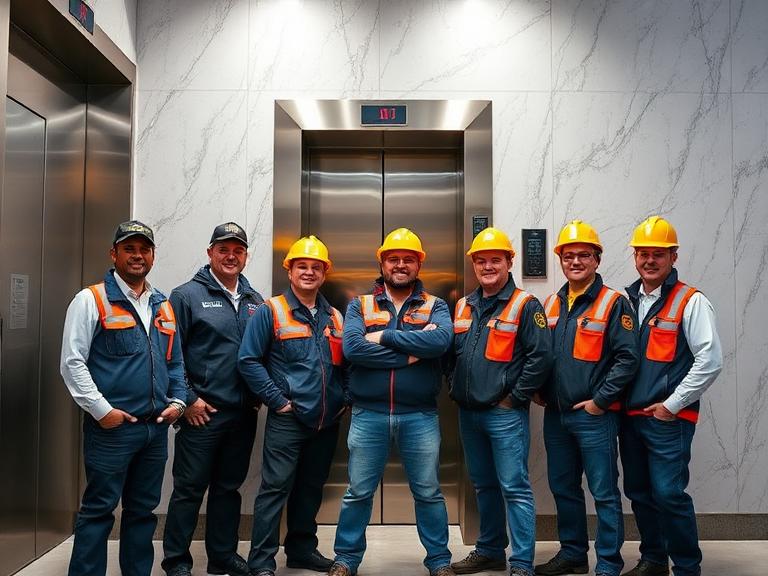
A professional lift repair service follows a rigorous, step-by-step diagnostic process. This systematic approach ensures that field technicians identify root causes rather than just masking surface symptoms.
Phase 1: Controller Error Code Extraction
The technician connects a handheld diagnostic tool to the main microprocessor motherboard. The system pulls historical fault records from the non-volatile memory, pinpointing which specific sub-circuit or sensor triggered the system lockdown.
Phase 2: Safety Loop Isolation and Continuity Testing
Using calibrated multimeters set to continuity mode, the repair engineer tests the safety circuit step by step. They check the pit switch, the overspeed governor contact, the terminal limits, and the individual door locks in sequence until they isolate the open contact.
Phase 3: Mechanical Alignment and Tolerance Calibration
If the fault involves the physical drive machinery, technicians mount magnetic-base dial indicators against the motor shaft to check for runout or axial play. They measure guide rail clearances using digital calipers to ensure they sit within a precise 0.5mm structural tolerance.
Phase 4: Dynamic Electrical Load Validation
After replacing components, the team connects clamp meters to monitor current draw across all three power phases. They track current spikes during acceleration, steady-state travel, and mechanical braking cycles to verify the motor runs well within its factory temperature and load parameters.
5. Emergency Evacuation Protocols & Safety Gear Calibration
When a mechanical or electrical failure causes a passenger entrapment, field teams prioritize safe, controlled rescue procedures over rapid machinery repairs.
Passenger Rescue Sequence
1.Main Power Isolation and Lockout Tagout:Step 1.
The response team cuts the primary 3-phase incoming power switch in the machine room and applies a physical lockout tag to prevent anyone from accidentally turning the power back on during the rescue.
2.Locate Car Position and Verify Brake Control:Step 2.
The technician checks the hoistway cable markings or looks through the shaft viewing ports to determine exactly where the cabin is stuck relative to the nearest floor landing.
3.Manual Brake Release and Controlled Hand-Winding:Step 3.
Using the manufacturer’s dedicated manual brake release lever, the engineer carefully opens the motor brakes in short intervals, using the hand-winding wheel to gently glide the car up or down to the nearest floor.
4.Mechanical Interlock Release and Passenger Exit:Step 4.
Once the cabin aligns with the landing zone, the technician uses a specialized triangular drop-key to manually unlock the outer landing door, allowing passengers to exit safely.
Critical Safety Warning for Building Owners: Never hand over an emergency door release key to untrained building security guards or residential caretakers. Unlocking a landing door when the lift car is parked away from that floor level can lead to severe accidents, including open-shaft falls.
6. Regulatory Re-Certification Post Major Component Repair
Under the legal frameworks defined by the Telangana Lifts, Escalators and Passenger Conveyors Act, completing major structural or mechanical repairs requires formal system re-validation.
If a repair company replaces or completes a major overhaul on any of the following critical components, the lift must be re-inspected before returning to service:
- The primary overspeed governor assembly or car safety wedges.
- The primary traction machine, worm gear sets, or main motor windings.
- The complete replacement of the steel suspension rope arrays.
The licensed repair provider must document the component specifications, log the torque settings, and submit a structural completion certificate to the Telangana State Electrical Inspectorate. A government lift inspector will then visit the property to perform a formal safety audit, verify the mechanical safety gear under load, and re-authorize the operational license. This statutory process ensures your building remains fully compliant with municipal safety codes.
7. Preventative Care: Managing the Post-Repair Lifecycle
To minimize unexpected system downtime after a major repair, properties should transition from reactive, emergency fixes to a structured preventative maintenance plan.
AMC Service Structure Evaluation
- Standard Maintenance Contracts: These basic service agreements cover routine monthly cleaning, guide rail lubrication, door operator adjustments, and basic safety circuit testing. While budget-friendly upfront, all replacement parts, emergency breakdown calls after hours, and major component overhauls are billed separately.
- Comprehensive Annual Maintenance Contracts (CAMC): These premium, all-inclusive plans cover the costs of all monthly preventative service visits, 24/7 emergency breakdown responses, and full replacement coverage for major components like control boards, inverter modules, ropes, and motor bearings. This setup provides predictable operating costs and keeps the system running reliably.
8. Frequently Asked Questions (FAQs)
Q1: Why does my elevator cabin stop slightly above or below the building’s floor levels?
A: This misalignment is called floor leveling inaccuracy. It typically points to a fault in the Variable Voltage Variable Frequency (VVVF) inverter drive or failing positioning sensors along the guide rails. When these electronic components drift due to heat or age, the controller fails to brake the motor at the precise millimeter mark, creating a dangerous tripping hazard for passengers.
Q2: How can we tell if our elevator’s steel suspension cables need immediate replacement?
A: Steel ropes must be inspected for physical wear during monthly service visits. Immediate indicators that a replacement is required include visible wire fraying along the rope strands, a reduction in rope diameter exceeding 6% of original specifications, or excessive accumulation of fine red iron-oxide powder, which indicates internal friction and strand breakdown.
Q3: What causes an elevator door to continuously cycle open and closed without traveling?
A: This continuous recycling is usually triggered by a fault in the infrared light curtain array or a mechanical obstruction in the floor sill tracks. If dust or an object blocks the invisible light curtain sensors, or if the door operator encounters physical resistance from debris in the tracks, the system automatically reopens the doors as a built-in safety reflex.
Q4: Is it safe to operate our apartment lift if the pit accumulates water during heavy rains?
A: No, operating an elevator with a flooded pit is highly dangerous. The lower pit houses critical safety components, including the lower terminal limit switches, car buffers, and the traveling electrical cable loops. If water pools in this area, it can short-circuit the safety loop, corrode mechanical components, and create potential electrical shock hazards across the entire cabin.
Q5: What is the typical technical response time for an emergency lift repair call in Kukatpally?
A: Professional lift repair companies in the Kukatpally area maintain localized emergency service teams. For standard technical breakdowns, onsite arrival times typically range from 45 to 90 minutes. However, if the call involves a passenger entrapment, the emergency protocol triggers immediate priority dispatch, guaranteeing a technician arrives within 30 minutes to perform a safe extraction.



Leave a Comment