
Table of Contents
EV Charging Consultants: Strategic Infrastructure & Deployment Guide
The rapid global shift toward sustainable transportation has moved electric vehicles (EVs) from a niche market segment into the mainstream. Governments worldwide, along with major automakers, are setting aggressive targets to phase out internal combustion engine (ICE) vehicles. However, the success of this transition depends on a massive, highly reliable, and intelligent charging infrastructure.
Deploying EV charging infrastructure involves much more than simply buying hardware and plugging it into a wall. It requires navigating complex electrical engineering challenges, high-voltage utility grids, multi-layered regulatory approvals, sophisticated software integrations, and dynamic economic models.
This operational gap is where EV charging consultants come in. Acting as specialized advisory partners, EV charging consultants bridge the gap between business objectives, electrical grid realities, and emerging technologies. They help enterprises, real estate developers, municipalities, and fleet operators deploy scalable, future-proof, and cost-effective EV charging solutions.
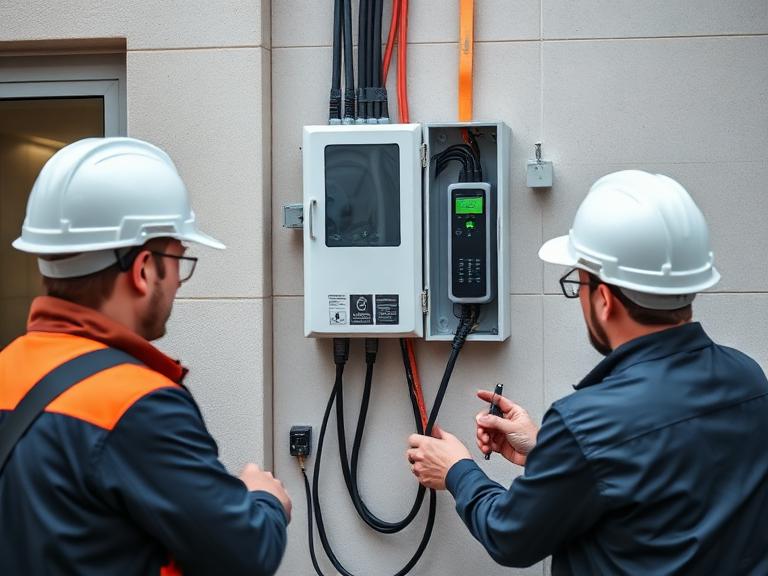
2. Core Responsibilities of Professional EV Charging Consultants
EV charging consultants serve as end-to-end advisors across every phase of the project lifecycle. They ensure that organizations do not over-purchase hardware, under-calculate electrical loads, or select non-interoperable software systems.
A. Site Feasibility & Capacity Analysis
Before purchasing hardware, consultants run detailed site evaluations. They assess existing electrical service panels, transformer capacity, physical layout, traffic patterns, and ADA (Americans with Disabilities Act) or local accessibility compliance.
B. Engineering & Architectural Planning
Consultants work with professional engineers (PEs) to design single-line diagrams (SLDs), civil trenching plans, switchgear configurations, and conduit routes. This step ensures installations meet National Electrical Code (NEC) guidelines and local building standards.
C. Hardware Procurement & Vendor-Neutral Selection
Rather than locking clients into proprietary systems, independent consultants evaluate top hardware options—ranging from Level 2 AC chargers to ultra-fast DC Fast Chargers (DCFC)—based on durability, cost, warranty, and operational fit.
D. Utility Grid Coordination & Interconnection
One of the biggest bottlenecks in EV charger installation is utility interconnection. Consultants lead discussions with local distribution companies (LDCs) or electric utilities to request capacity, manage transformer upgrades, and minimize costly grid interconnections.
E. Software (CPMS) & Interoperability Strategy
Hardware is only half the equation. Consultants help select and configure Open Charge Point Protocol (OCPP)-compliant Charging Station Management Systems (CSMS/CPMS). This software handles billing, user access, dynamic load distribution, and real-time network monitoring.
3. Detailed Feasibility Analysis & Site Engineering
The foundation of any successful EV infrastructure project lies in rigorous preliminary engineering. Skipping this phase often leads to project delays, massive cost overruns, and premature equipment failures.
Electrical Capacity Auditing
Consultants evaluate existing service entrance panels, voltage levels, and peak demand profiles. For example, installing ten 19.2 kW Level 2 chargers requires a continuous load capacity of:
$$\text{Total Load} = 10 \times 19.2\text{ kW} \times 1.25 \text{ (Safety Factor)} = 240\text{ kW}$$
At a standard 208V 3-phase configuration, this translates to:
$$\text{Current (Amps)} = \frac{240,000\text{ W}}{\sqrt{3} \times 208\text{ V}} \approx 666.1\text{ A}$$
If a building’s electrical service cannot support an additional continuous 666 Amp draw, consultants evaluate solutions like utility transformer upgrades, battery energy storage systems (BESS), or Dynamic Load Management (DLM) software.
Civil & Spatial Engineering Considerations
Civil engineering for EV charging goes far beyond designating parking spaces. Consultants design layouts that account for:
- Trenching & Directional Boring: Minimizing pavement destruction to run subterranean conduit pathways.
- Physical Protection: Placing heavy-duty steel bollards to protect charger hardware from vehicle impacts.
- ADA Accessibility: Designing compliant turning radiuses, slope gradients (typically under 2%), accessible bollards, and reach-height ranges.
- Environmental Resilience: Selecting NEMA 3R or NEMA 4X enclosure ratings to ensure reliable performance across extreme temperatures, rain, snow, and dust.
4. EV Charger Technology Matrix (Level 1, Level 2, DCFC)
Understanding charging levels is vital when matching business needs with technical constraints. Consultants guide clients through selecting the right mix of equipment based on dwell times, vehicle battery sizes, and available power.
| Feature / Metric | Level 1 (AC Slow) | Level 2 (AC Commercial) | DC Fast Charging (DCFC / Level 3) |
| Input Voltage | 120V 1-Phase AC | 208V / 240V 1-Phase or 3-Phase AC | 480V 3-Phase AC (or higher) |
| Power Output | 1.0 kW – 1.9 kW | 7.2 kW – 19.2 kW | 50 kW – 400 kW+ |
| Charge Speed | 3 – 5 miles of range / hr | 15 – 60 miles of range / hr | 100 – 300+ miles of range in 15–30 mins |
| Primary Deployment | Residential emergency use | Workplaces, Multi-Family, Retail | Highways, Commercial Fleets, Hubs |
| Hardware Cost (per port) | $200 – $600 | $1,200 – $6,000 | $25,000 – $150,000+ |
| Typical Dwell Time | 8 – 24 Hours | 2 – 8 Hours | 15 – 45 Minutes |
| Grid Impact | Minimal | Moderate (Scalable via DLM) | Severe (Requires Transformer/Substation Upgrade) |
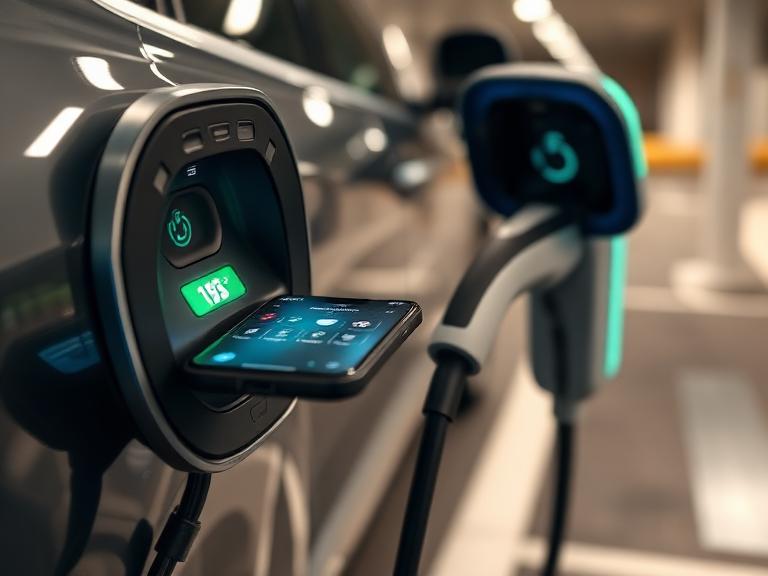
5. Software Architecture: CPMS, OCPP & Interoperability
Modern EV charging deployments rely as much on software as they do on heavy hardware. EV charging consultants recommend building on open standards to avoid vendor lock-in.
Open Charge Point Protocol (OCPP)
OCPP is the global standard protocol for communication between EV chargers and central management software.
- OCPP 1.6J: Widely used, offering smart charging, JSON-over-WebSockets communication, and core management capabilities.
- OCPP 2.0.1: Offers enhanced security, advanced diagnostic logs, improved smart charging capabilities, and native support for ISO 15118 (Plug & Charge).
Why Consultants Insist on OCPP: Using OCPP-compliant hardware prevents “bricking”—a scenario where a proprietary service provider goes out of business or raises fees, leaving hardware unusable. With OCPP, operators can easily switch software platforms without replacing physical chargers.
Open Charge Point Interface (OCPI)
While OCPP connects the charger to its management software, OCPI enables roaming between different charging networks. This allows drivers to use a single app or RFID card across multiple charging brands, expanding access and driver convenience.
ISO 15118 & Plug & Charge
ISO 15118 establishes secure communication between the electric vehicle and the charging station. It enables Plug & Charge, allowing automatic authentication and billing as soon as the cable is plugged into the vehicle—eliminating the need for credit card readers, RFID cards, or mobile apps.
6. Grid Integration, Utility Coordination & Smart Load Balancing
When adding high-powered electrical assets, utility demand charges can quickly erode operational profits if managed incorrectly. Consultants implement dynamic energy management strategies to protect both local building panels and the broader electrical grid.
Managing Demand Charges
Utilities bill commercial properties based on both total energy consumption ($\text{kWh}$) and peak power demand ($\text{kW}$) over a billing period. Uncontrolled simultaneous fast charging can spike peak demand, resulting in steep monthly charges.
Dynamic Load Management (DLM) & Peak Shaving
Dynamic Load Management software automatically balances power across connected vehicles based on real-time panel capacity and active vehicle demand.
For instance, if ten 22 kW Level 2 chargers are connected to a shared 100 kW power supply:
- Without DLM: Connecting five vehicles simultaneously pulls 110 kW, tripping the main breaker.
- With DLM: The system limits total draw to 100 kW by allocating 20 kW to each of the five vehicles. As vehicles finish charging, power redistributes to remaining vehicles safely.
7. Sector-Specific Industry Deployment Blueprints
EV infrastructure requires tailored deployment strategies depending on the asset class. EV charging consultants build custom designs based on operational goals and driver parking durations.
Fleet Depots & Logistics Hubs
- Primary Objective: High uptime, operational continuity, and lowest total cost of ownership (TCO).
- Hardware Mix: Medium-to-high power DC Fast Chargers combined with high-powered Level 2 units.
- Consultant Value: Syncing Charging Station Management Systems (CSMS) with fleet management telematics to ensure vehicles charge fully during scheduled overnight windows while minimizing peak demand charges.
Commercial Real Estate & Class-A Office Buildings
- Primary Objective: Attracting top-tier tenants, supporting corporate ESG goals, and enhancing overall property value.
- Hardware Mix: Dual-port Level 2 AC chargers (7.2 kW – 11.5 kW) with integrated cable management.
- Consultant Value: Establishing access-control tiers—such as free charging for key executives, discounted rates for tenants, and premium paid charging for the general public.
Multi-Family Residential (MUDs & Apartments)
- Primary Objective: Providing reliable overnight charging, improving resident retention, and boosting rental income.
- Hardware Mix: Compact, wall-mounted Level 2 chargers with robust user authentication options.
- Consultant Value: Setting up automated utility cost-recovery billing that directly charges residents for electricity used, protecting property management from unpredictable common-area power bills.
Retail & Hospitality (Hotels, Malls, Supermarkets)
- Primary Objective: Increasing customer dwell time, attracting high-income EV drivers, and generating direct charging revenue.
- Hardware Mix: A strategic combination of Level 2 chargers (for 2–3 hour shopping visits) and 50–150 kW DC Fast Chargers (for quick 30-minute turnarounds).
- Consultant Value: Integrating retail loyalty programs with charging sessions, offering free or discounted charging when customers meet minimum store purchase amounts.
8. Strategic Business & Financial Models
EV infrastructure projects offer versatile monetization strategies. Consultants design financial models aligned with a client’s risk tolerance, capital outlay constraints, and long-term goals.
A. Direct Capital Expenditure (CapEx) / Owner-Operator Model
The site owner purchases, installs, and operates the charging infrastructure directly.
- Pros: Complete control over branding, pricing, and access; retains 100% of revenue after payment processing fees.
- Cons: Full financial exposure to hardware costs, utility upgrades, civil construction, and ongoing maintenance liabilities.
B. Charge Point Operator (CPO) / Site Host Model
A third-party Charge Point Operator funds hardware purchase, installation, and daily operations in exchange for a long-term property lease or revenue-share agreement.
- Pros: Near-zero capital expenditure and operational risk for the property owner.
- Cons: Limited site control, long-term contract lock-ins, and a smaller share of charging revenue.
C. Charging-as-a-Service (CaaS) / OpEx Model
A modern financing approach where site hosts pay a predictable monthly operational subscription fee covering hardware, installation, software, and ongoing maintenance.
- Pros: Preserves capital, transfers equipment risk, and guarantees high service uptime SLAs.
- Cons: Requires recurring operational expenditure (OpEx) commitments over multi-year contract terms.
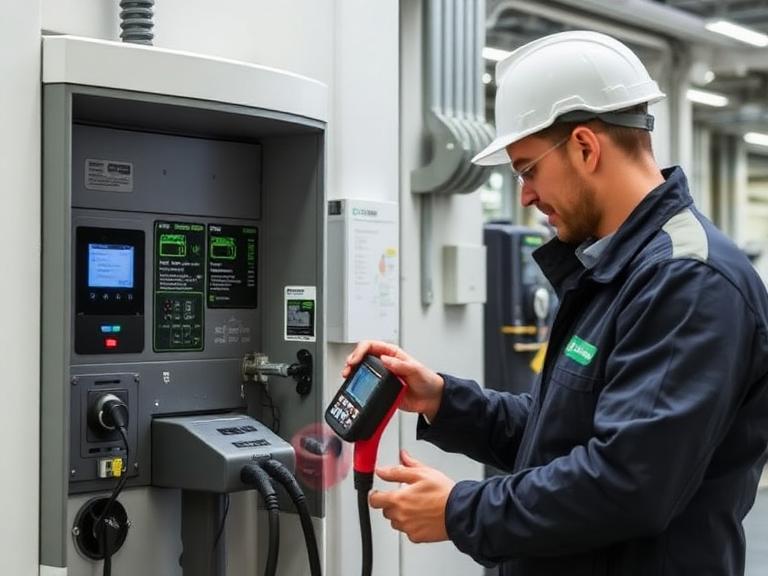
9. Comprehensive Step-by-Step Implementation Roadmap
A successful commercial EV charging installation typically spans 12 to 36 weeks, depending on utility upgrade requirements.
10. Financial Incentives, Government Grants & ESG ROI
Government incentives and corporate sustainability targets play a major role in driving commercial EV charging adoption.
Tapping Government & Utility Rebates
EV charging consultants assist clients in identifying, applying for, and securing stacked financial incentives:
- Federal Tax Incentives: Tax credits for qualified alternative fuel vehicle refueling property (e.g., Section 30C in the US).
- Regional Subsidies & Utility Rebates: Programs like the UK Workplace Charging Scheme (WCS), India’s PM E-DRIVE scheme, or US state-level make-ready utility rebates that offset electrical infrastructure costs.
- Accelerated Depreciation: Opportunities like MACRS (Modified Accelerated Cost Recovery System) allow businesses to write off capital costs faster, accelerating project payback.
Driving Corporate ESG Metrics
EV charging infrastructure supports key ESG (Environmental, Social, and Governance) reporting frameworks:
- Scope 1 Emissions: Direct emissions reductions achieved by converting commercial internal combustion fleets to zero-emission electric vehicles.
- Scope 3 Emissions: Indirect emissions reductions made by encouraging employees and visitors to drive EVs to office sites.
- Green Building Certifications: Earning valuable points toward LEED, BREEAM, and WELL certifications, along with improving real estate asset ratings on GRESB and CDP benchmarks.
11. Frequently Asked Questions (15 Key FAQs)
1. What exactly do EV charging consultants do?
EV charging consultants provide end-to-end advisory services for electric vehicle infrastructure deployments. They manage site feasibility, load capacity audits, engineering designs, hardware selection, utility coordination, software integration, and incentive applications.
2. Why should my business hire an EV charging consultant instead of buying chargers directly?
Buying chargers directly often leads to costly mistakes—such as over-purchasing power capacity, choosing incompatible software, or missing out on major government rebates. Consultants deliver vendor-neutral expertise to protect investments, optimize capital expenditure, and ensure full compliance.
3. How much does it cost to install commercial EV charging stations?
Turnkey installation costs vary widely:
- Level 2 AC Chargers: Range from $3,000 to $10,000+ per port, including hardware, minor trenching, and electrical panel connections.
- DC Fast Chargers (DCFC): Range from $50,000 to $180,000+ per port due to required high-voltage transformers, switchgear, and civil utility upgrades.
4. How long does an EV charging project take from start to finish?
A standard Level 2 commercial project typically takes 12 to 20 weeks. However, DC Fast Charger deployments requiring major utility grid upgrades can take 26 to 52 weeks due to utility lead times for transformers and switchgear.
5. What is the difference between Level 2 and DC Fast Charging (DCFC)?
Level 2 operates on 208V/240V AC power and adds roughly 15 to 45 miles of range per hour, making it ideal for workplaces, apartments, and hotels. DC Fast Chargers convert high-voltage AC grid power directly to DC power inside the charger, adding 100+ miles of range in 15 to 30 minutes.
6. Can our existing electrical infrastructure support EV chargers?
That depends on your building’s current electrical service margin and peak load usage. A consultant performs an electrical load audit to determine if existing panels can handle added chargers or if you need Dynamic Load Management (DLM) or a utility transformer upgrade.
7. What is dynamic load management (DLM), and why is it important?
DLM is a software feature that actively balances available electrical power across multiple chargers in real time. It prevents electrical panel overloads and avoids expensive utility grid upgrades by capping peak power demand.
8. What is OCPP, and why should I demand it for my charging hardware?
OCPP (Open Charge Point Protocol) is an open communication standard linking chargers with cloud management software. Choosing OCPP-compliant hardware ensures you aren’t locked into a single software vendor and can switch providers anytime without replacing physical chargers.
9. How can a property owner monetize EV charging stations?
Site hosts can set up flexible pricing models using software platforms:
- Fee per kWh consumed (e.g., $0.35 per kWh).
- Flat session fee (e.g., $3.00 per connection).
- Time-based billing (e.g., $0.10 per minute connected).
- Idle occupancy fees to encourage drivers to move their vehicles once fully charged.
10. Are there grants or tax rebates available to lower installation costs?
Yes. Many regions offer federal tax credits, state/provincial clean energy grants, and local utility “make-ready” rebates that can cover 30% to 80% of total project setup costs. EV charging consultants help stack these incentives to maximize savings.
11. What is the difference between an owner-operator model and Charging-as-a-Service (CaaS)?
Under the Owner-Operator model, you pay upfront CapEx for all hardware and installation, keeping 100% of profit margins. Under CaaS, a provider owns and maintains the equipment while you pay a predictable monthly operational subscription, lowering upfront capital risk.
12. How do EV charging stations boost property values and ESG scores?
EV chargers increase commercial property value by serving as a premium amenity that attracts eco-conscious tenants, employees, and visitors. They also lower corporate Scope 2 and Scope 3 carbon footprints, directly improving LEED, GRESB, and CDP sustainability ratings.
13. What maintenance is required for commercial EV chargers?
Maintenance involves routine cable checks, connector inspections, firmware updates, cleanings, and occasional preventative maintenance. Consultants recommend pairing hardware with operational SLAs that guarantee 98%+ network uptime.
14. What is Plug & Charge (ISO 15118)?
ISO 15118 (Plug & Charge) is an advanced security standard that allows an EV to communicate directly with an installed charger when plugged in. It automatically handles authentication, security checks, and billing—no credit card taps or mobile apps required.
15. What are demand charges, and how do they impact monthly power bills?
Demand charges are extra fees commercial utilities bill based on the single highest peak of power used during a billing cycle. Unmanaged fast charging can create sudden power spikes that increase monthly electric bills. Consultants mitigate this using dynamic load management, battery storage (BESS), or staggered charging schedules.




Leave a Comment