
Table of Contents
Best Dermatologist in Hyderabad | Dr. Showrya Gadde
Healthy skin and hair perform essential functions beyond aesthetics—they shield the body against environmental pathogens, regulate body temperature, and reflect internal systemic health. However, maintaining optimal dermatological health in a rapidly expanding metropolis like Hyderabad presents unique biological and environmental challenges.
Between persistent urban air pollution, extreme summer heat, high humidity, and mineral-heavy municipal hard water, residents across Kondapur, Madhapur, HITEC City, and Jubilee Hills frequently encounter stubborn cutaneous issues. When non-prescription skincare products, viral beauty trends, and salon facials fail to deliver sustainable results, consulting a qualified dermatologist in Hyderabad provides an evidence-based pathway to real healing.
At Dr. Showrya Gadde Dermatology & Wellness, located in Jubilee Enclave near HITEC City and Kondapur, clinical care is grounded in thorough diagnostics, medical ethics, and individualized patient education.
Direct Answer: What Is a Dermatologist and What Conditions Do They Treat?
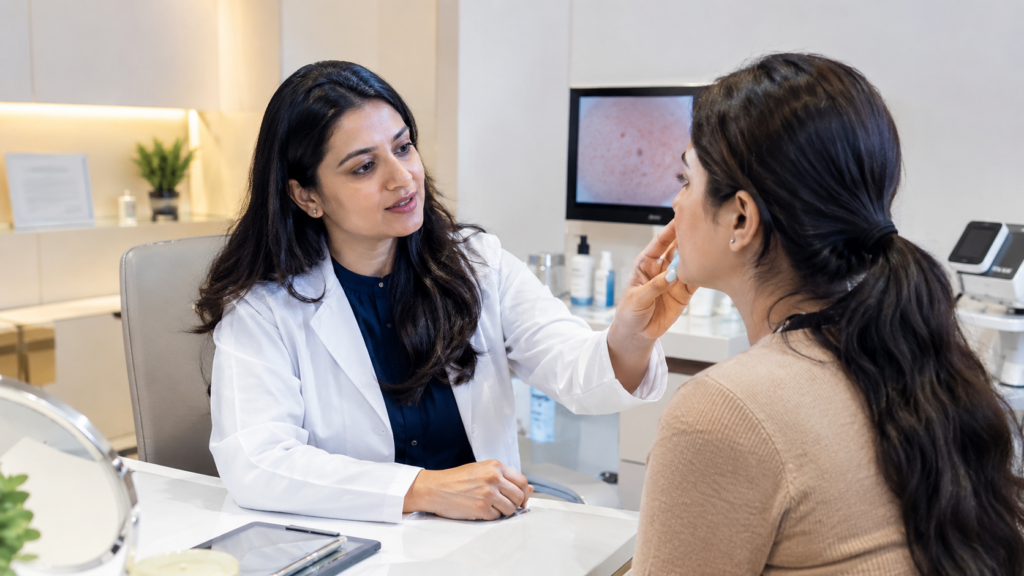
A dermatologist is a registered medical doctor who has completed post-graduate specialty training (such as an MD or DNB in Dermatology, Venereology, and Leprosy). They specialize in diagnosing and managing over 3,000 conditions affecting the skin, hair, nails, and mucous membranes.
Unlike cosmetologists or beauticians—whose scope is restricted to surface grooming—a board-certified dermatologist evaluates systemic biochemistry, performs dermatoscopic evaluations, conducts skin biopsies, prescribes pharmaceutical-grade medications, and operates medical-grade laser equipment safely.
Local Environmental Factors Impacting Skin and Scalp Health in Hyderabad
Living in Hyderabad exposes the skin and hair to distinct environmental stressors that directly influence clinical outcomes:
1. Hard Water Mineral Deposition
Hyderabad’s groundwater and supply lines carry elevated levels of dissolved calcium and magnesium ions. Daily exposure to hard water causes:
- Disruption of the Skin Barrier: Mineral ions disrupt the natural acid mantle (pH 4.5–5.5), increasing transepidermal water loss (TEWL) and leaving skin prone to irritation, dryness, and eczema flare-ups.
- Comedone Formation: Hard water minerals react with surfactants in soap to form an insoluble film that clogs pores and triggers inflammatory acne.
- Scalp Irritation and Hair Shaft Damage: Mineral crusts settle along the hair shaft and scalp, increasing friction, causing cuticle breakage, and worsening dandruff (seborrheic dermatitis).
2. UV Radiation & Seasonal Thermal Stress
Hyderabad experiences long months of high ultraviolet (UVA/UVB) radiation. Unprotected sun exposure accelerates melanocyte production—causing melasma, freckles, and post-inflammatory hyperpigmentation (PIH)—while breaking down dermal collagen, leading to premature fine lines and skin laxity.
3. Urban Air Pollution ($PM_{2.5}$ / $PM_{10}$)
Particulate matter and chemical pollutants suspend in urban traffic air, settling on cutaneous lipid layers. This oxidative stress triggers localized inflammatory responses, worsening conditions like rosacea, chronic urticaria, and cystic breakouts.
Common Dermatological Conditions Diagnosed by a Dermatologist
Understanding the root cause of skin and hair distress is key to achieving long-term recovery.
[Systemic Drivers: Hormones, Genetics, Stress] \
                                                --> [Cutaneous Inflammation] --> [Targeted Clinical Protocol]
[External Drivers: UV Rays, Hard Water, Dust]  /
Chronic & Inflammatory Skin Diseases
- Acne Vulgaris & Cystic Breakouts: Driven by androgenic sebum hypersecretion, follicular keratinization, and bacterial overgrowth (Cutibacterium acnes).
- Hyperpigmentation & Melasma: Deep dermal or epidermal melanin overproduction caused by hormonal changes, thermal heat, or UV radiation.
- Eczema & Psoriasis: Immune-mediated inflammatory skin conditions requiring long-term clinical control and barrier restoration.
Trichology Concerns (Hair & Scalp)
- Androgenetic Alopecia (Pattern Loss): Genetically inherited miniaturization of hair follicles caused by dihydrotestosterone (DHT) sensitivity in both men and women.
- Telogen Effluvium: Rapid hair shedding triggered by systemic stress, post-viral illness, low serum ferritin, or Vitamin D3 deficiency.
Clinical Diagnostic Evaluation: What to Expect During Your Visit
A consultation with a dermatologist involves an structured evaluation:
- Medical History Review: Detailed discussion of your active symptoms, medical background, current medications, dietary habits, and skincare routine.
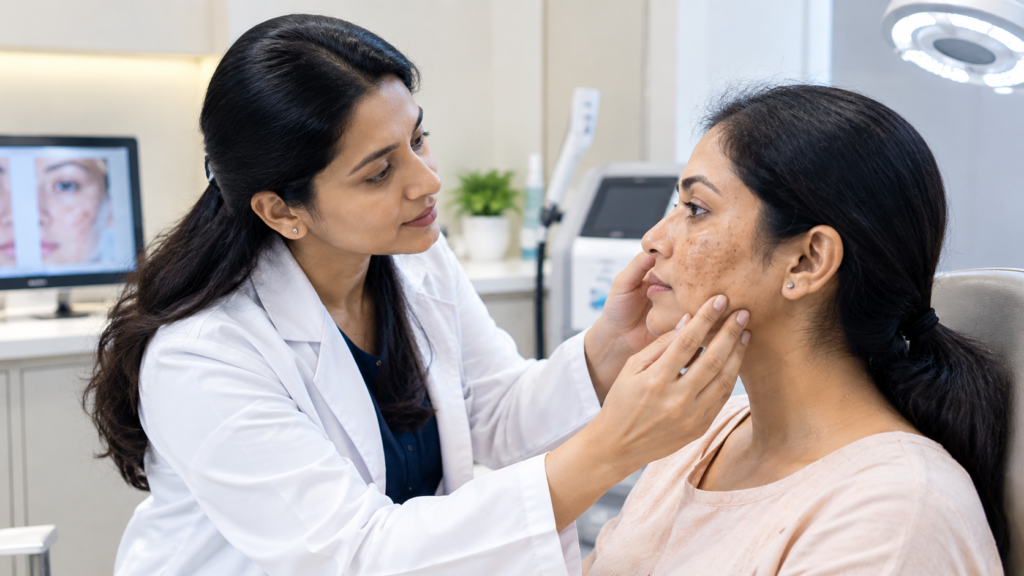
- Polarized Dermoscopy: Non-invasive microscopic examination of pigment architecture, hair follicle density, and scalp vascularity.
- Targeted Laboratory Investigations: Ordering key blood tests (such as CBC, Serum Ferritin, Vitamin D3, TSH, or hormonal panels) when internal imbalances are suspected.
- Tailored Treatment Design: Creating an individualized treatment plan combining prescription topicals, oral medications, and targeted in-clinic procedures.
Overview of Clinical & Aesthetic Procedures
At Dr. Showrya Gadde Dermatology & Wellness, advanced procedures are performed using standard, US-FDA cleared technologies:
1. Acne Scar Resurfacing
Severe acne scars require a combined treatment approach:
- Subcision: Releasing deep fibrous bands pulling down on tethered scars to lift the skin bed.
- Microneedling Radiofrequency (MNRF): Delivering controlled thermal radiofrequency deep into the dermis to remodel collagen without damaging the skin surface.
- Medical Chemical Peels: Using precise formulations of Salicylic, Glycolic, Mandelic, or TCA acids to clear comedones and fade dark marks.
2. US-FDA Cleared Laser Treatments
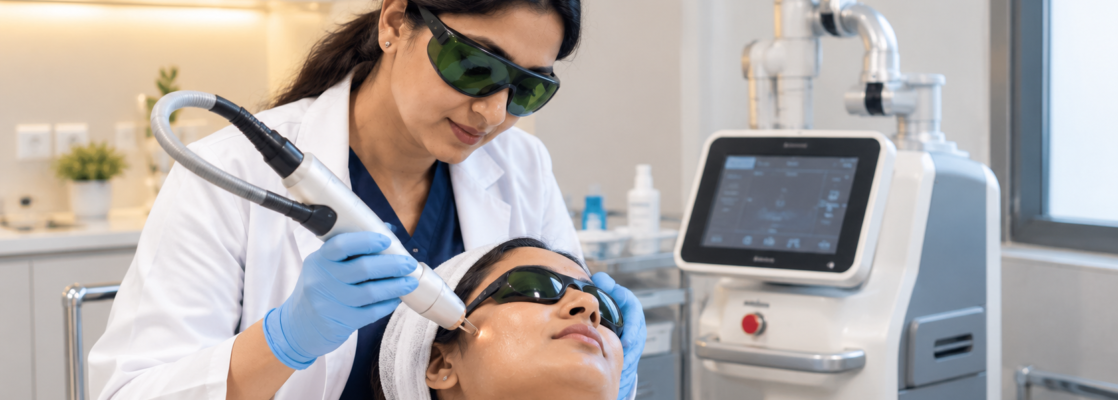
- Laser Hair Reduction: Utilizing tailored wavelengths (1064 nm Nd:YAG or Diode) configured for dark Indian skin tones (Fitzpatrick Types IV–V) to reduce hair density safely.
- Laser Toning (Q-Switched Lasers): Shattering excess dermal melanin into fine particles that are cleared naturally by the body’s lymphatic system.
3. Hair Restoration Therapies
- Growth Factor Concentrate (GFC) & PRP: Processing growth factors from the patient’s blood serum and injecting them into the scalp to revitalize dormant hair roots and improve hair density.
- Medical Pharmacotherapy: Combining evidence-based topical treatments, peptide serums, and oral medications under physician supervision.
4. Non-Surgical Facial Rejuvenation
- Botulinum Toxin: Temporarily relaxing target facial muscles to smooth out dynamic forehead lines, frown lines, and crow’s feet.
- Dermal Fillers & Skin Boosters: Restoring lost structural facial volume and deep tissue hydration using biocompatible hyaluronic acid gels.
Treatment Safety, Realistic Expectations, and Limitations
Clinical dermatology focuses on progressive, health-oriented improvements rather than instant overnight changes:
- Biological Cycles Take Time: Skin epidermal renewal takes 28 to 40 days, while hair follicles require 3 to 6 months to transition from resting to active growth phases. Consistency with your prescribed treatment is essential.
- Evidence-Based Medical Goals: No medical treatment can guarantee 100% “flawless” skin or absolute hair density recovery. Responsible dermatologists focus on achievable, significant clinical improvements tailored to your body.
- Expected Procedural Responses: Temporary mild redness, light peeling, or slight swelling may occur after procedures like chemical peels, laser sessions, or injections. These are normal, expected responses that generally resolve within a few hours to a few days.
Pre-Care and Aftercare Instructions
Following proper pre-treatment and post-treatment guidelines ensures maximum safety and optimal clinical results:
Pre-Procedure Instructions
- Pause Active Topicals: Stop applying retinoids, glycolic acid, salicylic acid, and strong active serums 3 to 5 days prior to any laser, chemical peel, or microneedling treatment.
- Minimize Sun Exposure: Avoid direct sunbathing, outdoor tanning, or intense UV exposure for at least one week before your appointment.
- Avoid Plucking or Waxing: If undergoing laser hair reduction, do not wax, pluck, or thread the target area for 2 to 3 weeks prior (shaving is permitted as it preserves the hair follicle root).
Post-Procedure Aftercare
- Apply Broad-Spectrum Sunscreen: Apply a broad-spectrum, non-comedogenic SPF 30+ sunscreen every morning and reapply every 3 hours when exposed to daylight.
- Use Gentle Cleansers: Wash with a mild, soap-free cleanser for 3 to 5 days post-procedure. Avoid harsh scrubs or face brushes.
- Hydrate Skin Barrier: Apply prescribed ceramides, healing ointments, or hyaluronic acid to calm the skin and support barrier repair.
- Avoid High Heat and Sweating: Skip heavy gym sessions, saunas, hot showers, and swimming pools for 24 to 48 hours to prevent irritation or secondary skin infections.
Patient Care at Dr. Showrya Gadde Dermatology & Wellness
Located in Jubilee Enclave, HITEC City, Dr. Showrya Gadde Dermatology & Wellness provides comprehensive skin, hair, and aesthetic care.
Dr. Showrya Gadde emphasizes transparent, patient-first care. Every patient receives a clear explanation of their underlying condition, available treatment options, expected recovery timelines, and home care protocols, ensuring a comfortable and well-informed medical experience.
Frequently Asked Questions (FAQs)
1. How do I select the best dermatologist in Hyderabad for my skin condition?
Look for a doctor with recognized post-graduate medical credentials in dermatology (MD, DNB, or DDVL), verified clinical experience, transparent patient reviews, and a clinic equipped with standard medical technology.
2. What is the standard consultation fee for a dermatologist in Hyderabad?
In Hyderabad, a specialist dermatologist consultation fee generally ranges between ₹600 and ₹1,000 depending on the physician’s experience and location. At Dr. Showrya Gadde Dermatology & Wellness, consultation fees are structured transparently.
3. What causes sudden severe hair fall in Hyderabad?
Rapid hair loss in Hyderabad is commonly caused by hard water mineral buildup, high urban stress, nutritional deficiencies (like Vitamin D3 or Ferritin), hormonal imbalances (such as PCOS or thyroid disorders), and genetic androgenetic alopecia.
4. Are laser skin treatments safe for dark or Indian skin tones?
Yes, modern US-FDA cleared laser systems (like 1064 nm Nd:YAG) are safe and effective for dark Indian skin tones when operated by a trained medical dermatologist.
5. How many sessions are needed for laser hair reduction?
Most patients require 6 to 8 sessions spaced 4 to 6 weeks apart, as lasers specifically target hair follicles during their active growth phase (anagen phase).
6. What is the main difference between salon facials and medical chemical peels?
Salon facials offer temporary superficial hydration. Medical chemical peels use precise pharmaceutical-grade formulations applied by doctors to exfoliate deeper skin layers, clear acne, and fade pigmentation.
7. Can acne scars be completely removed?
While 100% removal is rarely possible, combining clinical procedures like subcision, Microneedling Radiofrequency (MNRF), and fractional lasers can achieve a 70% to 85% improvement in scar depth and texture.
8. How long does it take to see results from hair restoration treatments?
Because hair growth cycles move slowly, a reduction in hair shedding typically becomes visible in 6 to 8 weeks, while noticeable improvements in hair density require 3 to 6 months of consistent treatment.
9. What is the best way to treat dark spots and melasma?
Effective management includes daily broad-spectrum SPF 30+ sun protection, prescription topical depigmenting agents, gentle chemical peels, and low-fluence laser toning supervised by a dermatologist.
10. Why do frequent breakouts happen in Hyderabad’s climate?
Hyderabad’s humid summers and high dust levels induce excessive sebum production and clogged pores, encouraging bacterial growth and leading to frequent acne breakouts.
11. Are chemical peels painful?
Most medical chemical peels cause only a mild, brief tingling or warming sensation lasting a few minutes. Soothing post-peel neutralizers and cooling gels are applied to keep you comfortable.
12. How can I prevent premature skin aging?
Daily use of broad-spectrum sunscreen, an antioxidant-rich diet, consistent hydration, and physician-guided active ingredients like retinoids help slow down collagen loss and premature aging.
13. Should I consult a dermatologist for persistent dandruff?
Yes, chronic dandruff is often seborrheic dermatitis, an inflammatory condition driven by yeast overgrowth that responds best to prescription antifungal shampoos, scalp lotions, and clinical care.
14. Is PRP or GFC treatment painful for hair loss?
Topical numbing creams are applied to the scalp prior to the injections, making the procedure very tolerable with minimal discomfort.
15. How often should I visit a dermatologist for routine skin checks?
An annual skin check is recommended for overall skin health. However, patients with active conditions like acne, eczema, or those undergoing active cosmetic procedures may need visits every 4 to 8 weeks.