
Table of Contents
Skin Brightening Treatment Hyderabad | Dr. Showrya
Skin brightening treatment refers to dermatological and aesthetic approaches used to improve the appearance of dullness, uneven pigmentation, tanning, dark spots, post-inflammatory pigmentation and uneven skin tone.
The objective is not to change a person’s natural skin colour. Instead, professional skin brightening focuses on helping the skin appear more even-toned, clearer, healthier and more radiant by addressing the factors responsible for visible dullness and pigmentation.
Depending on the underlying concern, a dermatologist may recommend skincare, chemical peels, laser-based treatments, facials, skin boosters or a combination of approaches.
For people searching for skin brightening treatment in Hyderabad, the most important first step is identifying why the skin appears dull or uneven rather than choosing a treatment based only on its popularity.
Why Does Skin Become Dull or Uneven?
Skin brightness can change for many reasons. Some concerns are temporary, while others require longer-term dermatological management.
Common contributors include:
- Sun exposure
- Tanning
- Hyperpigmentation
- Melasma
- Post-acne pigmentation
- Post-inflammatory hyperpigmentation
- Dehydrated skin
- Accumulation of dead skin cells
- Acne and previous breakouts
- Environmental pollution
- Irregular skincare
- Skin ageing
- Hormonal changes
- Certain medications or medical conditions
- Damage to the skin barrier
Hyderabad’s climate, outdoor exposure, dust and intense sunlight can make consistent sun protection particularly important for people concerned about pigmentation and uneven skin tone.
A dermatologist can distinguish between simple dullness and pigmentation-related concerns before recommending treatment.
Skin Brightening Is Different From Skin Whitening
The terms “skin brightening” and “skin whitening” are sometimes used interchangeably online, but they do not necessarily describe the same goal.
Skin brightening generally refers to improving the appearance of dull, uneven or pigmented skin while maintaining the person’s natural complexion.
A medically appropriate treatment plan may focus on:
- Reducing the appearance of excess pigmentation
- Improving uneven skin tone
- Addressing sun-related discoloration
- Improving skin texture
- Supporting hydration
- Managing post-acne marks
- Improving overall skin quality
The goal should be healthy-looking and even-toned skin, rather than trying to achieve an artificially lighter complexion.
This distinction is particularly important when evaluating claims made by cosmetic clinics or online skincare products.
Who May Consider Skin Brightening Treatment?
Skin brightening treatment may be considered by adults experiencing concerns such as:
- Dull-looking skin
- Uneven complexion
- Sun tan
- Mild pigmentation
- Dark spots
- Post-acne marks
- Uneven skin texture
- Dehydrated-looking skin
- Rough or tired-looking skin
- Mild sun damage
- Certain forms of hyperpigmentation
However, not every person requires an in-clinic procedure.
Some people may benefit primarily from appropriate skincare and sun protection, while others may require a combination of treatments.
A dermatologist should determine whether a procedure is appropriate based on skin type, pigmentation pattern, medical history, previous treatments and current skin condition.
Common Skin Brightening Treatments in Hyderabad
There is no single treatment that works for every type of dullness or pigmentation. Dermatologists may consider different approaches depending on the diagnosis.
1. Laser Toning
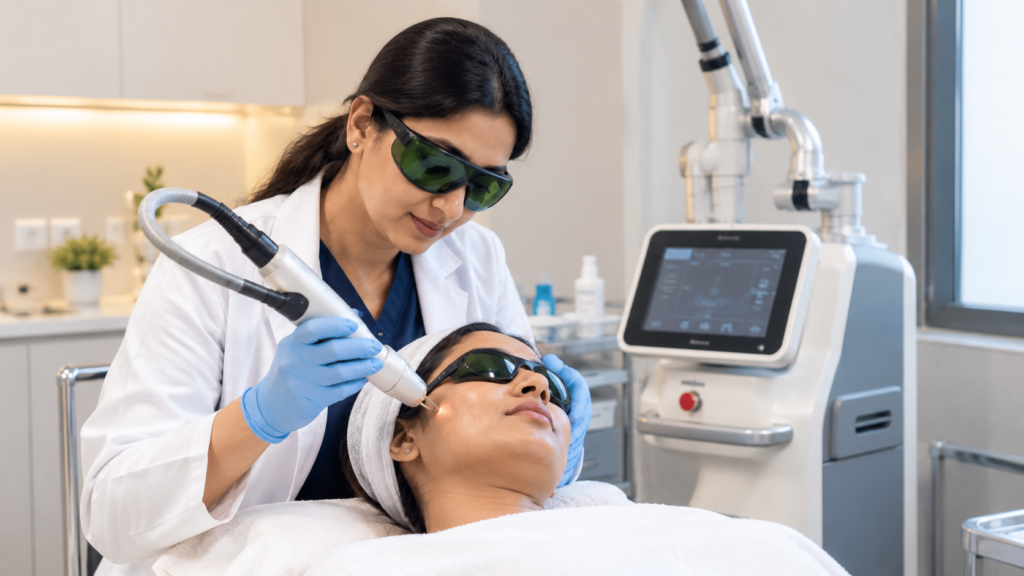
Laser toning is commonly discussed for pigmentation and uneven skin tone.
The treatment uses low-fluence laser energy over multiple sessions to address certain forms of pigmentation. At Dr. Showrya Gadde’s clinic, laser toning is described as an option for pigmentation, tanning and uneven skin tone.
A typical session may involve cleansing the skin, selecting appropriate laser settings and treating the targeted area. The clinic states that individual sessions may take around 20–30 minutes, although treatment schedules vary.
Laser toning should not be selected simply because it is marketed as a “glow treatment.” A dermatologist needs to determine whether the pigmentation is suitable for laser-based treatment.
2. Chemical Peels
Chemical peels use carefully selected chemical agents to exfoliate the skin and improve specific concerns.
Depending on the peel and the patient’s skin condition, treatment may be considered for:
- Dull skin
- Uneven pigmentation
- Post-acne marks
- Uneven texture
- Superficial discoloration
The strength and composition of a peel should be selected according to the individual’s skin type and concern.
People with darker Indian skin tones require particular attention to treatment settings because excessive irritation can sometimes contribute to post-inflammatory pigmentation.
3. Cosmelan Peel
Cosmelan is a professional peel-based approach used for pigmentation concerns.
The treatment is designed to address hyperpigmentation and uneven skin tone. It may be considered for certain cases involving melasma, post-inflammatory pigmentation and superficial pigmentation.
Because pigmentation can have different causes and depths, Cosmelan may not be appropriate for every patient.
A dermatologist can assess the pigmentation pattern and determine whether this type of treatment is suitable.
4. Carbon Laser Peel
Carbon laser peel is another procedure sometimes chosen for patients with oily or congested skin.
It involves applying a carbon-based lotion to the skin followed by laser treatment.
It may be considered when the patient has concerns involving:
- Excess oil
- Enlarged pores
- Blackheads
- Dull appearance
- Uneven texture
- Certain pigmentation concerns
The treatment should be selected based on the patient’s overall skin condition rather than simply because it is promoted as a quick glow procedure.
5. Hydrating and Facial Treatments
Not every person seeking brighter skin needs a laser.
Hydrating facial treatments may be considered when dullness is associated with dehydration, surface buildup or compromised-looking skin quality.
HydraFacial-style treatments generally combine cleansing, exfoliation, extraction and hydration.
These treatments can provide a temporary refreshed appearance, but they should not be considered a universal treatment for deeper pigmentation disorders.
If dark patches or persistent pigmentation are present, medical assessment may be more appropriate.
6. Skin Boosters
Skin boosters are injectable treatments designed primarily to improve hydration and skin quality.
They may be considered for concerns such as:
- Dehydration
- Dull appearance
- Fine lines
- Skin texture
- Reduced skin elasticity
They are different from treatments specifically designed to remove pigmentation.
Therefore, someone searching for skin brightening treatment Hyderabad should not assume that a skin booster is automatically the best option.
The treatment should match the underlying concern.
How Does a Dermatologist Choose the Right Treatment?
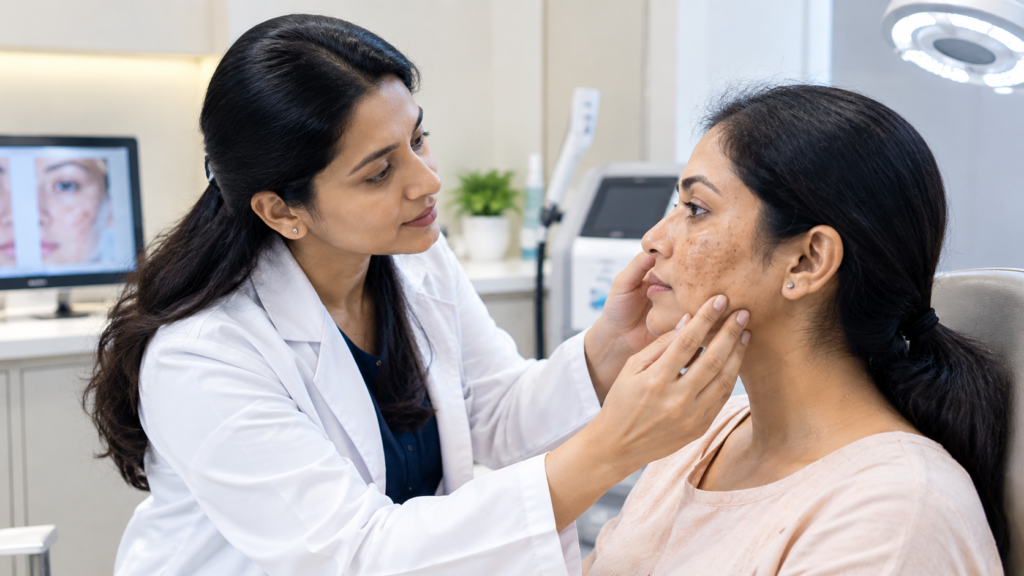
A professional skin-brightening plan begins with assessment.
During consultation, a dermatologist may consider:
Skin Type
Indian skin can respond differently to lasers, peels and other procedures. Treatment settings need to be selected carefully.
Pigmentation Pattern
Melasma, tanning, post-acne pigmentation and other forms of discoloration can look similar but may require different management.
Skin Sensitivity
Sensitive or irritated skin may require barrier-supportive care before any procedure.
Previous Treatments
Previous lasers, peels, home remedies or cosmetic products can influence treatment planning.
Current Skincare Routine
A dermatologist may ask about products used at home, including exfoliating products, active ingredients and sunscreen.
Medical History
Certain conditions, medications and hormonal factors can influence pigmentation and treatment choices.
This individualized approach is more appropriate than selecting a procedure solely because it is advertised as the “best skin brightening treatment.”
Skin Brightening Treatment for Indian Skin
Indian skin commonly contains higher levels of melanin compared with lighter skin types. This does not mean that cosmetic procedures cannot be performed, but it does mean that treatment planning requires care.
Overly aggressive treatment may cause irritation, inflammation or post-inflammatory hyperpigmentation in susceptible individuals.
For this reason, people considering skin brightening treatment in Hyderabad should look for a qualified dermatologist who understands pigmentation and treatment considerations for Indian skin.
A good treatment plan should consider:
- Natural skin tone
- Pigmentation depth
- Sensitivity
- History of pigmentation
- Sun exposure
- Previous procedures
- Current skincare
- Recovery requirements
The safest approach is generally the one that addresses the specific concern without unnecessarily damaging the skin barrier.
What Happens During a Skin Brightening Consultation?
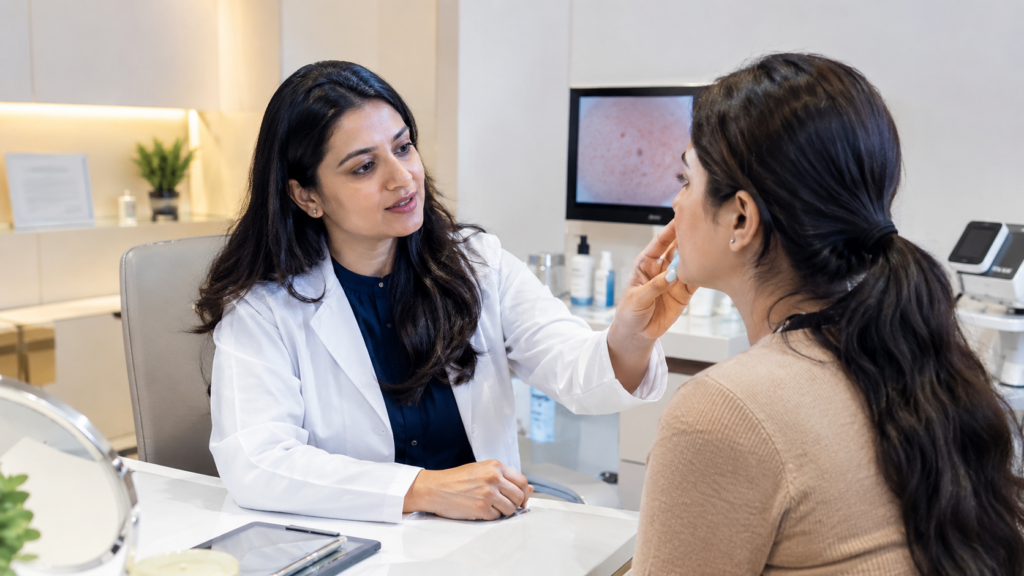
A consultation is usually the starting point for professional treatment.
The dermatologist may examine:
- Overall skin condition
- Pigmentation distribution
- Acne or acne marks
- Skin texture
- Signs of sun exposure
- Hydration and sensitivity
- Previous treatment history
The doctor can then discuss possible treatment options.
Depending on the concern, the plan may involve skincare alone, an in-clinic procedure or a combination approach.
Patients should also be encouraged to ask questions about expected improvement, possible side effects, downtime, number of sessions and aftercare.
How Many Sessions Are Needed?
The number of sessions varies significantly.
Some treatments are performed as a single procedure, while laser-based approaches may involve a series of sessions.
The number depends on:
- Type of pigmentation
- Severity
- Skin type
- Treatment selected
- Response to previous sessions
- Sun exposure
- Maintenance routine
For example, the clinic’s laser toning information describes multiple sessions rather than a single treatment. This demonstrates why patients should be cautious about promises of permanent or instant pigmentation removal.
A dermatologist can provide a more appropriate estimate after examining the skin.
Is Skin Brightening Treatment Painful?
Discomfort depends on the procedure.
Some facial treatments may cause little or no discomfort. Laser procedures can produce sensations such as warmth, tingling or mild stinging. Certain treatments may involve a topical numbing product when appropriate.
Peels can cause temporary tingling, warmth or sensitivity depending on their formulation.
Patients should inform the dermatologist if they have particularly sensitive skin or a history of reactions to cosmetic procedures.
Are There Side Effects?
Every professional skin procedure can have potential side effects.
Depending on the treatment, temporary effects may include:
- Redness
- Mild swelling
- Sensitivity
- Dryness
- Peeling
- Temporary irritation
- Warmth or tingling
Pigmentation-focused treatments also require careful management because irritation or excessive inflammation can sometimes contribute to additional pigmentation.
Patients should follow the dermatologist’s post-treatment instructions and avoid experimenting with additional active products immediately after a procedure.
Why Sunscreen Matters After Skin Brightening Treatment
Sun protection is one of the most important parts of pigmentation management.
Ultraviolet exposure can contribute to tanning and pigmentation and may interfere with efforts to maintain an even skin tone.
After professional treatment, dermatologists may recommend broad-spectrum sunscreen and other protective measures according to the patient’s condition.
Good sun-protection habits can include:
- Applying sunscreen as directed
- Reapplying when appropriate
- Using hats or umbrellas outdoors
- Avoiding unnecessary prolonged sun exposure
- Following post-procedure sun restrictions
A procedure cannot replace daily sun protection.
Skin Brightening Treatment and Acne Marks
Acne can leave behind discoloration even after the active acne has improved.
These marks are often related to post-inflammatory pigmentation rather than permanent scarring.
A dermatologist can determine whether the patient has pigmentation, textural scarring or both.
Treatment options may differ accordingly.
For pigmentation, approaches may include carefully selected topical care, peels or laser-based treatments. Textural acne scars may require a different treatment strategy.
Therefore, a patient should not choose a laser solely because it is advertised for “acne scars and glow.”
Skin Brightening Treatment for Pigmentation
Pigmentation is one of the most common reasons people seek professional skin-brightening care.
Possible causes include:
- Sun exposure
- Melasma
- Acne
- Skin inflammation
- Hormonal influences
- Previous injuries or irritation
- Certain medications
Different pigmentation disorders behave differently.
For example, melasma can be persistent and may require long-term management rather than a single procedure.
A dermatologist-led plan can help identify the likely cause and select treatment accordingly.
Why Choose a Dermatologist for Skin Brightening?
Skin-brightening procedures may appear simple from a consumer perspective, but choosing the wrong treatment or settings can result in irritation and unwanted pigmentation.
A dermatologist can:
- Diagnose the underlying skin concern
- Evaluate pigmentation
- Consider skin type
- Select appropriate procedures
- Adjust treatment intensity
- Explain risks
- Provide aftercare guidance
- Monitor the response
Dr. Showrya Gadde is an MBBS, MD Dermatology-qualified dermatologist whose clinic provides dermatological and aesthetic services in Hyderabad. The clinic identifies pigmentation-focused services including laser toning and Cosmelan peel treatment among its offerings.
The clinic is located at Jubilee Enclave Road, Madhapur, Hyderabad, and serves patients from areas including Kondapur, Hitech City, KPHB, Gachibowli and Manikonda.
How to Choose the Right Skin Brightening Clinic in Hyderabad
Before selecting a clinic, consider the following:
1. Check the Doctor’s Qualifications
Look for a qualified dermatologist rather than selecting a clinic based only on social media popularity.
2. Ask for a Skin Assessment
A proper consultation should happen before choosing a procedure.
3. Understand the Diagnosis
Ask what is causing your pigmentation or dullness.
4. Discuss Alternatives
A good dermatologist should explain whether skincare, peels, lasers or other approaches are appropriate.
5. Ask About Downtime
Understand how long redness, peeling or sensitivity may last.
6. Ask About Maintenance
Some pigmentation concerns can recur, especially when influenced by sun exposure or hormonal factors.
7. Avoid Guaranteed Results
No responsible professional should guarantee a specific cosmetic outcome because individual responses vary.
Skin Brightening Treatment Hyderabad: What Results Should You Expect?
The realistic objective is healthier-looking, more even-toned skin.
Possible improvements may include:
- Reduced appearance of certain pigmentation
- More even skin tone
- Improved skin texture
- Better hydration
- Reduced appearance of dullness
- A fresher-looking complexion
Results depend on the underlying concern, treatment type and individual response.
Some pigmentation conditions also require maintenance because their causes can continue after treatment.
A long-term approach combining appropriate treatment, skincare and sun protection may be more useful than repeatedly seeking quick-fix procedures.
Frequently Asked Questions
1. What is the best skin brightening treatment in Hyderabad?
There is no single best treatment for everyone. The appropriate option depends on whether the concern is tanning, pigmentation, melasma, acne marks, dehydration or general dullness. A dermatologist can recommend treatment after examining the skin.
2. Is skin brightening the same as skin whitening?
No. Skin brightening generally focuses on improving dullness, uneven tone and pigmentation while maintaining the person’s natural complexion. Skin whitening implies changing the natural skin colour, which should not be the objective of responsible dermatological care.
3. How much does skin brightening treatment cost in Hyderabad?
The cost varies depending on the treatment, number of sessions, area being treated and clinic. Laser toning, chemical peels, facials and injectable treatments can have different pricing. A consultation is the best way to obtain an individualized estimate.
4. Can skin brightening treatment remove pigmentation?
Certain treatments can reduce the appearance of some forms of pigmentation. However, the outcome depends on the cause and depth of pigmentation. Conditions such as melasma may require ongoing management.
5. Is laser toning good for pigmentation?
Laser toning may be considered for selected pigmentation concerns. It is not suitable for every pigmentation disorder, so assessment by a dermatologist is important before treatment.
6. How many laser toning sessions are needed?
The number varies according to the pigmentation and individual response. Multiple sessions may be recommended rather than expecting complete improvement from one treatment.
7. Is skin brightening treatment safe for Indian skin?
Many dermatological procedures can be performed safely on Indian skin when appropriately selected and performed with suitable settings. Because Indian skin can be prone to post-inflammatory pigmentation, professional assessment is important.
8. Can skin brightening treatment help with tanning?
Certain treatments may help improve the appearance of sun-related tanning or uneven pigmentation. However, continued sun exposure can contribute to recurrence, making sun protection essential.
9. Can skin brightening treatment help acne marks?
Some treatments may help reduce post-acne pigmentation. However, pigmentation and acne scars are different concerns and may require different treatment approaches.
10. Is skin brightening treatment permanent?
Not necessarily. Pigmentation can return because of sun exposure, hormonal influences, acne or other underlying factors. Maintenance skincare and sun protection may be necessary.
11. Is a facial enough for brighter skin?
A facial may temporarily improve hydration and surface appearance, particularly when dullness is related to dehydration or buildup. Persistent pigmentation should be evaluated by a dermatologist rather than managed only with facials.
12. Does skin brightening treatment hurt?
Discomfort varies by treatment. Some procedures involve minimal sensation, while lasers and peels can cause warmth, tingling or temporary sensitivity. The dermatologist can explain what to expect before treatment.
13. How long does a skin brightening procedure take?
Treatment time depends on the procedure and treatment area. Some facial treatments may be relatively short, while certain laser or peel procedures require additional preparation and recovery instructions.
14. Can sensitive skin undergo brightening treatment?
Sensitive skin may still be treated, but the procedure and intensity need to be selected carefully. A dermatologist may first focus on improving the skin barrier if the skin is irritated.
15. What should I avoid after skin brightening treatment?
Patients may need to temporarily avoid certain active skincare products, excessive sun exposure, heat or exfoliation depending on the procedure. Always follow the specific aftercare instructions provided by the treating dermatologist.
16. Should I use sunscreen after skin brightening treatment?
Yes. Sun protection is an important part of managing pigmentation and maintaining an even skin tone. The dermatologist can recommend an appropriate sunscreen routine based on your skin and treatment.
17. Can pigmentation come back after treatment?
Yes. Some forms of pigmentation can recur. Melasma and sun-related pigmentation, in particular, may require long-term management rather than one-time treatment.
18. How do I choose a dermatologist for skin brightening in Hyderabad?
Look for a qualified dermatologist with experience in pigmentation and cosmetic dermatology. During consultation, ask about the diagnosis, recommended treatment, expected results, risks, downtime and maintenance.
Final Thoughts
Skin brightening treatment in Hyderabad should be approached as a dermatological concern rather than simply a cosmetic “glow” procedure.
The right treatment depends on what is causing dullness or uneven pigmentation. Laser toning, chemical peels, Cosmelan, carbon laser treatments, hydrating procedures and other dermatological options may have different roles depending on the patient’s skin condition.
The most important steps are accurate assessment, appropriate treatment selection, realistic expectations, sun protection and professional aftercare.
For persistent pigmentation, melasma, acne marks or significant uneven skin tone, consulting a qualified dermatologist can help determine whether professional treatment is appropriate and which approach best matches the individual’s skin.